Labor Solutions on Modern Dairies
Labor Solutions on Modern Dairies
By Jaclyn Krymowski for American Dairymen
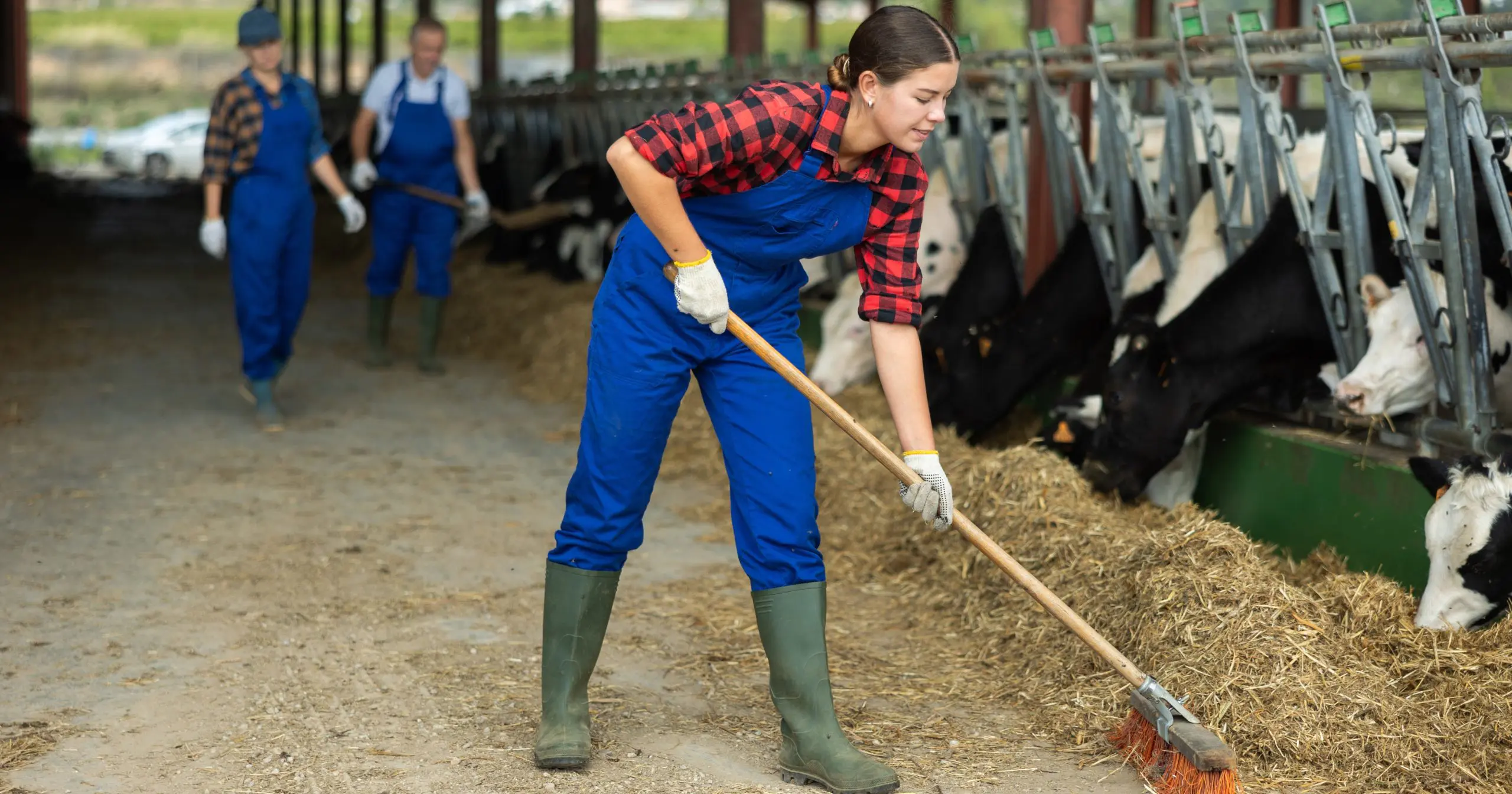
Getting work done on a dairy farm has always been a challenge. Our predecessors usually enlisted family members to get the job done. Many of today’s dairy families carry that same baton, but now must also rely on hired help, which brings different challenges and headaches.
According to the U.S. Department of Agriculture, labor expenses account for roughly 13% of the average dairy farm’s operating costs, and finding and retaining qualified employees remains one of the industry’s greatest challenges. And it goes without saying, the current and present generations running a farm are tasked with new considerations never seen before, like employee retention and workplace culture.
A reliable workforce goes above and beyond simply getting tasks done. Qualified employees play a role in overall profitability and cow comfort. The larger the operation the truer this is as you can’t have your eyes on everything. You must trust your team to be the ones with boots on the ground, making high stress decisions when necessary and troubleshooting pain points on their own.
Building a skilled workforce
Employee training is the foundation that yields dividends as it improves productivity and consistency. A solid training program ensures the same information is being relayed when new employees start.
Updating and re-evaluating the training will also ensure current protocols are followed across the farm. Having the same information relayed through a training program can make sure the majority of errors are prevented.
Research has repeatedly shown that employee actions directly impact animal welfare, milk quality, mastitis incidence and overall herd health. The people caring for the cows every day are often the greatest factor in whether protocols succeed or fail.
Training can cover the basics and expectations of handling the animals and how any neglect or negative actions can impact productivity and quality.
An often overlooked aspect of solid employee training is safety benefits. Employees who are well trained can reduce serious workplace accidents and costly incidents harming humans or animals.
Training Types
The best training programs aren’t so much about the how but the why. Because dairy operations depend so heavily on good hygiene and general cow care, employees who understand why it’s important to follow through with various procedures are more likely to do things properly.
Milking procedures and hygiene protocols
The milking routine should be easily repetitive. Don’t assume that your milkers automatically know the importance of a seemingly small detail, like using a clean towel on each cow. Don’t assume they will know how long to leave teat dip onto set. You will need to spell it out and explicitly tell them. Cameras in the parlor might be worth considering to make sure protocols are being followed correctly.
Health checks and treatment
Encouraging and teaching employees to take the time to observe animal behavior can save time and money. The more eyes on the lookout, the better for catching signs of disease early. Teaching employees to keep consistent reports and observations or notice changes of a sick cow can help with the success of treatments.
Calf care and feeding management
As with milking, knowledge about calf care and related protocols should never be assumed. Make sure that the manager is aware of common and recurring issues that happen on your operation so that associated protocols can be enacted. Know your numbers. What are your metrics for measuring success or failure? Do you see trends with certain employees or certain shifts that are noteworthy?
Equipment operation and maintenance
Tying in with safety, there is a lot of equipment moving around the farm, from skid loaders to feed trucks. It is paramount to not only train employees on some of the specific farm equipment but also teach safety to ensure employees stay cognizant of potential dangers while working.
Workplace safety and biosecurity
Dairy farms may not all fall under the same regulations depending on size and employee count, but following Occupational Safety and Health Administration standards and maintaining a culture of safety is a worthwhile goal regardless. Employees should understand proper animal handling, chemical storage, lockout procedures and what to do in the event of an emergency. Biosecurity protocols are equally important as diseases become more complex and the consequences of an outbreak become more costly.
Training them right
A structured onboarding process can help employees get up to speed faster and feel more comfortable in their role. This can include written materials, shadowing experienced employees and regular check-ins during the first few weeks.
Having written standard operating procedures creates consistency. They do not need to be overly complicated, but they should be accessible and regularly updated so employees have a resource to refer back to. It’s also worth noting that many employees learn best by doing. Pairing new employees with experienced mentors can help reinforce good habits and encourage questions.
If your workforce speaks multiple languages, make training materials available in the languages most commonly spoken on the farm. Clear communication is nonnegotiable if you want employees who are both safe and successful in what they do.
Training should not stop after onboarding. Regular refreshers can help reinforce expectations and introduce new protocols or technologies. Periodic evaluations can help identify strengths and opportunities for improvement while making sure employees remain confident in their responsibilities.
Simple metrics can help measure whether training efforts are effective and identify where additional support may be needed. Tracking accidents and near misses can help determine if workplace safety efforts are improving over time.
Monitoring somatic cell counts, mastitis cases, calf health and other herd metrics can provide valuable feedback on how well protocols are being followed.
Keeping the good ones
Replacing employees is expensive and time-consuming. Recruiting, onboarding and training all require resources that could be invested elsewhere.
Experienced employees understand the rhythms of the farm and often notice problems before they become major issues. Losing that knowledge can be difficult to replace. Beyond this, high turnover can create frustration among remaining employees and disrupt day-to-day operations.
In some regions, assistance with housing or transportation can help attract and retain quality employees, especially when labor is difficult to find. Employees who feel respected are more likely to remain engaged and invested in their work. Treating employees fairly and listening to their concerns goes a long way.
Having reference documentation for employees to access, especially when there are changes or unusual events and a manager isn’t around can help avoid major disruptions.
Pay and benefits are not the only way to make sure employees are recognized for their efforts. Physically calling them out in front of their peers to show what a good job they are doing can be a real boost.
Even simple gatherings like a cookout or holiday meal can help strengthen relationships and create a sense of belonging on the farm. This may not be for everyone, but investing in key employees where needed could make a big impact.
Offering employees the opportunity to grow in their role or on the farm not only provides an objective for them to achieve, but it also encourages them to take ownership and responsibility of what they do every day.
Employees are more likely to stay when they see opportunities for advancement. Promoting from within also rewards hard work and loyalty.
Emergencies happen, so when those arise, having a system in place or a chain of command can help plan for the unplanned. Cross-training employees and maintaining flexibility where possible can help accommodate life’s inevitable challenges while keeping the farm running smoothly.
There is no single solution to dairy labor challenges. But investing in employees through training, communication and a positive workplace culture can pay dividends for years to come. Employees are more than a line item on the balance sheet. They are caretakers of the cows, representatives of your farm and often the deciding factor between a good year and a great one. As dairies continue to evolve, building and keeping a skilled workforce may be one of the most important investments a producer can make.
Follow us on Facebook! American Dairymen | Facebook