
Manure Management for Modern Dairy Farms
Manure Management for Modern Dairy Farms
By Jessica Graham
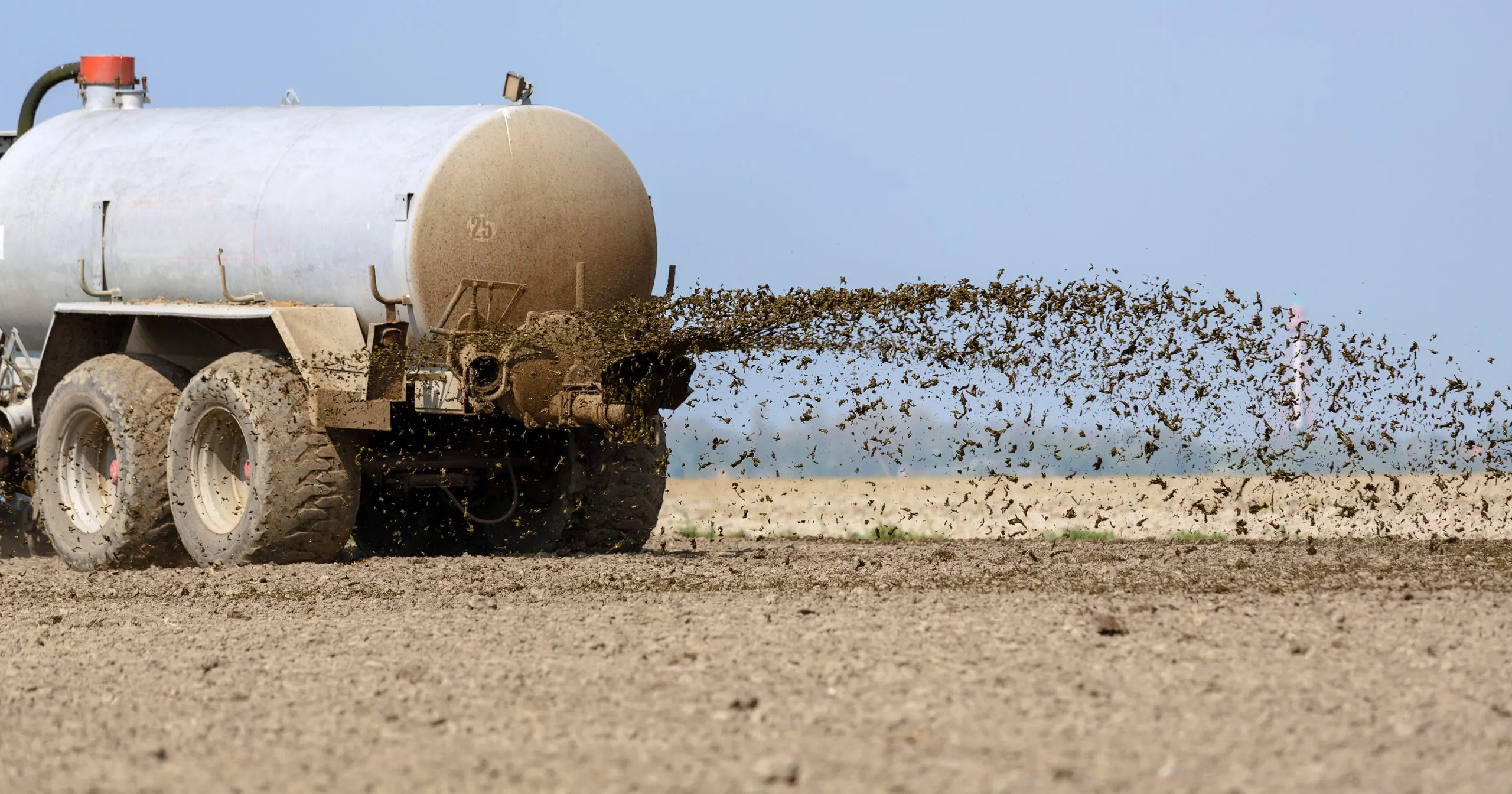
Manure is something every dairy farm deals with every single day. A lactating dairy cow produces roughly 18 gallons of manure per day, and that volume adds up quickly. How producers handle, store, treat, and apply manure directly affects soil fertility, environmental stewardship, herd safety, and farm profitability. Today’s manure management landscape is evolving rapidly, driven by new technologies, tighter regulations, and a growing emphasis on sustainability. New tools, new rules, and new ideas are helping farmers use manure in better ways. By understanding the benefits, challenges, and innovations shaping manure management, dairy farmers can turn manure from a nuisance into a cornerstone of their agronomic success.
Maximize Fertilizer
Manure is rich in macronutrients—nitrogen (N), phosphorus (P), and potassium (K)—and also provides organic matter that improves soil structure, waterholding capacity, and nutrient retention. Unlike synthetic fertilizers, manure contributes to longterm soil health by building organic matter and enhancing microbial activity.
But manure’s nutrient profile also presents challenges. Phosphorus is typically the limiting factor in manure application. As your Word document notes, manure often contains high levels of phosphorus, and regulatory limits on P application usually dictate how many acres a dairy can fertilize. A cow generally produces enough manure to fertilize 2.5 to 4 acres, depending on soil test levels and regulatory thresholds.
The high phosphorus levels mean that applying manure strictly to meet crop nitrogen needs often results in overapplication of phosphorus. This is where modern manure separation technology becomes transformative.
New Technology Helps Separate Manure Better
In recent years, manure separation has become a major focus. Kurt Grimm from NutraDrip explains that the industry is working hard to separate solids from liquids. When solids are removed, much of the phosphorus is removed with them. This makes the remaining liquid easier to apply and safer for the environment. According to Grimm, the resulting liquid retains most nitrogen and potassium, has 30–50% of the phosphorus removed, and can be injected through drip irrigation or centerpivot systems. This manure liquid dramatically reduces phosphorus loading and environmental risk.
Producers who invest in separation technology or optimize logistics may see lower costs, while those with older equipment or limited land may face higher expenses.
Understanding your own cost structure is essential. Manure may save fertilizer dollars, but it must be thought out and managed to do so.
Mechanical Separation Without Chemicals
New machines can separate manure solids down to very small sizes. Some machines use screens as small as 25 microns. These machines work like a centrifuge but cost less and use less energy. The liquid that comes out of this process still smells like manure, but it has most of the nitrogen and potassium. It also has much less phosphorus. In many cases, about one third to one half of the phosphorus is removed.
This cleaner liquid can be applied through drip irrigation or center pivot systems. It flows easily and does not clog the lines.
Applying Manure Under the Soil During the Growing Season
The second major change is applying manure during the growing season instead of only in fall or spring. Farmers can blend manure with water and send it through subsurface drip irrigation lines. This puts nutrients right where the roots can use them.
This method has many benefits. It reduces runoff. It reduces soil compaction because heavy equipment is not used. It spreads out labor. It also helps crops use nutrients more efficiently. Instead of applying ten thousand gallons per acre in fall, farmers can apply small amounts each week during the season.
Manure Costs Money to Handle
Manure saves money on fertilizer, but it is not free. Handling manure takes time, labor, fuel, and equipment. A study from Iowa State University found that the average cost to store, haul, and apply manure is about one hundred four dollars per cow each year. This is about forty five cents per hundredweight of milk.
This number can change a lot from farm to farm. Many things affect the cost. These include: equipment age fuel prices labor costs distance to fields type of storage herd size local rules. Some farms have older equipment that costs more to run. Some farms have fields close to the barn, which lowers hauling costs. Some farms use new separation tools that reduce the amount of manure they must haul.
Every farm should know its own cost. The average number is helpful, but your own cost may be higher or lower.
Fall Safety Reminders
Manure can be dangerous if not handled safely. Daniel Andersen from Iowa State University reminds farmers that fall manure removal can create unsafe air. He says the safest time to agitate manure is when barns are empty. This keeps workers and animals away from harmful gases.
Foam in Manure Pits
Foam in pits is a serious safety risk. Foam can trap methane. Methane can explode if it meets a spark. If foam is more than six inches deep, farmers need to act. The best time to break down foam is when barns are empty. Strong ventilation is needed to move gases out of the building.
Hydrogen Sulfide
Hydrogen sulfide is one of the most dangerous gases in manure. It forms when manure sits for a long time without oxygen. When solids are stirred, hydrogen sulfide can be released in large amounts. This gas can kill people and animals very quickly. This is the reason why pits are so dangerous. Occasionally, you’ll see on the news reports of injury or death from accidents at pits.
Farmers should agitate only when barns are empty use strong ventilation remove ignition sources use pit treatments to reduce foam
Environmental Rules and Public Concerns
Manure management is closely watched by state and federal agencies. Farmers must follow rules about how much manure they apply, where they apply it, and how they store it. These rules help protect water and soil.
The Future of Manure Management
Manure management is changing fast. New tools help farmers remove phosphorus, apply manure during the season, and reduce odor and gas emissions. The best systems will be simple to run, safe, and cost effective. They should work well even if government credits or grants go away.
Dairymen should think about short-term and long-term costs, safety, ease of use, nutrient efficiency, and labor needs. The goal is to build a system that works today and will still work years from now. Get a plan, and leverage the use of your manure.
Follow us on Facebook! American Dairymen | Facebook