Dairy Foods Market: Changing Consumer Preferences Reshape the Global Dairy Industry
Dairy Foods Market: Changing Consumer Preferences Reshape the Global Dairy Industry
Dairy has always been a familiar part of the everyday diet, but the way people consume dairy products is changing. Consumers are becoming more conscious about nutrition, ingredients, convenience, and even the environmental impact of food production. As a result, the dairy foods industry is moving beyond traditional milk and butter toward products such as high-protein yogurt, fortified milk, probiotic drinks, lactose-free products, specialty cheese, and other value-added offerings.
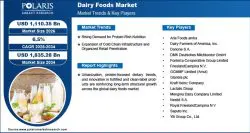
According to Polaris Market Research, the global dairy foods market was valued at USD 1,044.12 billion in 2025. The market is projected to reach USD 1,835.28 billion by 2034, growing at a CAGR of 6.5% from 2026 to 2034. Rising protein consumption, urbanization, improving cold-chain infrastructure, and growing demand for premium dairy products are among the factors supporting this expansion.
Consumer Demand Is Moving Toward Healthier Dairy Choices
One of the most noticeable changes in the dairy market is the growing focus on health and nutrition. Consumers are looking for products that offer more than basic nourishment. High-protein milk, Greek yogurt, probiotic products, vitamin-fortified beverages, and lactose-free dairy are becoming increasingly attractive to health-conscious buyers.
This shift is particularly relevant among younger consumers and urban households, where fitness, digestive health, and balanced diets are influencing purchasing decisions. Manufacturers are responding by reformulating existing products and introducing new options with additional protein, vitamins, probiotics, and reduced sugar.
Clean-label positioning is another important trend. Shoppers increasingly want to understand what goes into the products they buy, creating opportunities for dairy brands that can combine simple ingredients with strong nutritional value.
Asia Pacific Remains a Major Growth Engine
Asia Pacific accounted for approximately 39.7% of the global dairy foods market in 2025, according to Polaris Market Research. Rapid urbanization, rising disposable incomes, and the expansion of the middle class are supporting demand for packaged and branded dairy products across the region.
Countries such as India and China have large consumer populations and established dairy consumption patterns. At the same time, changing lifestyles are creating demand for convenient products that can fit into increasingly busy routines.
The growth of supermarkets, organized retail, online grocery platforms, and improved refrigeration infrastructure is also making packaged dairy products more accessible. For dairy companies, this creates opportunities to expand beyond traditional markets and reach consumers in emerging urban and semi-urban areas.
Milk Still Leads, While Cheese and Specialty Products Gain Momentum
Milk remains the largest product segment, accounting for approximately 46.5% of the market in 2025. Its position is supported by its role as a staple food and as an important raw material for products such as yogurt, cheese, butter, and dairy beverages.
However, other categories are creating fresh opportunities. Cheese, for example, is benefiting from the growing popularity of Western-style diets, quick-service restaurants, bakery products, pizzas, and ready-to-eat meals.
Yogurt is also evolving from a simple breakfast or snack item into a functional food category. Probiotic, high-protein, low-sugar, and lactose-free varieties are helping brands appeal to consumers with specific dietary preferences.
Technology Is Changing Dairy Processing
Technology is quietly becoming an important part of the dairy industry’s future. Dairy processors are investing in automation, digital quality monitoring, predictive analytics, and traceability systems to improve production efficiency and maintain consistent product quality.
Digital tools can help manufacturers monitor production processes, identify potential quality issues, and improve supply-chain visibility. On farms, smart dairy technologies are being used to monitor animal health, milk production, and farm operations.
Cold-chain development is equally important. Dairy products are highly sensitive to temperature, so better refrigerated transportation and storage can reduce spoilage and allow products to reach markets farther from production centers.
Sustainability Is Becoming Harder to Ignore
Growth in the dairy industry also comes with increasing pressure to address environmental concerns. Dairy companies are exploring ways to reduce emissions through improved animal feed, manure management, renewable energy, and more efficient processing.
Methane reduction has become a particularly important area of discussion. At the same time, regenerative agricultural practices and lifecycle assessments are receiving greater attention as companies look for measurable ways to improve the sustainability of dairy production.
For consumers, sustainability can influence brand perception. For producers and processors, however, it is also becoming a matter of long-term operational efficiency and competitiveness.
Challenges Could Shape the Pace of Growth
Despite the positive outlook, the industry faces several challenges. Lactose intolerance remains a barrier to conventional dairy consumption in parts of Asia Pacific, Africa, and Latin America. This is encouraging manufacturers to develop lactose-free and digestive-friendly alternatives.
Raw milk prices are another concern. Feed costs, weather conditions, herd productivity, energy prices, and regional supply-demand conditions can all influence milk prices and ultimately affect processing margins and retail prices.
Dairy companies therefore need to balance affordability with innovation. Premium products can offer attractive margins, but consumers in price-sensitive markets still place considerable importance on value.
Competitive Landscape
The global dairy foods market includes major dairy cooperatives, food companies, and regional producers competing across milk, cheese, yogurt, butter, and value-added categories. Some of the prominent companies identified by Polaris Market Research include Arla Foods amba, Dairy Farmers of America, Danone S.A., Fonterra Co-operative Group Limited, FrieslandCampina N.V., GCMMF Limited (Amul), Glanbia plc, Kraft Heinz Company, Lactalis Group, Mengniu Dairy Company Limited, Nestlé S.A., Saputo Inc., and Yili Group Co., Ltd.
Competition is increasingly influenced by product innovation, distribution networks, sourcing capabilities, brand reputation, and the ability to respond quickly to changing consumer preferences.
Looking Ahead
The dairy foods market is entering a period where traditional consumption and modern food trends are coming together. Milk will continue to play a central role, but growth is increasingly being shaped by functional nutrition, premium products, convenience, sustainability, and technology.
With the global market expected to reach USD 1,835.28 billion by 2034, dairy companies have significant opportunities ahead. The brands most likely to stand out will be those that understand what consumers actually want: products that are nutritious, convenient, trustworthy, affordable, and aligned with changing lifestyles.
Read More: https://www.polarismarketresearch.com/
Follow us on Facebook! American Dairymen | Facebook