Dealing with Cold Stress in Dairy Cattle
Dealing with Cold Stress in Dairy Cattle
By Heather Smith Thomas
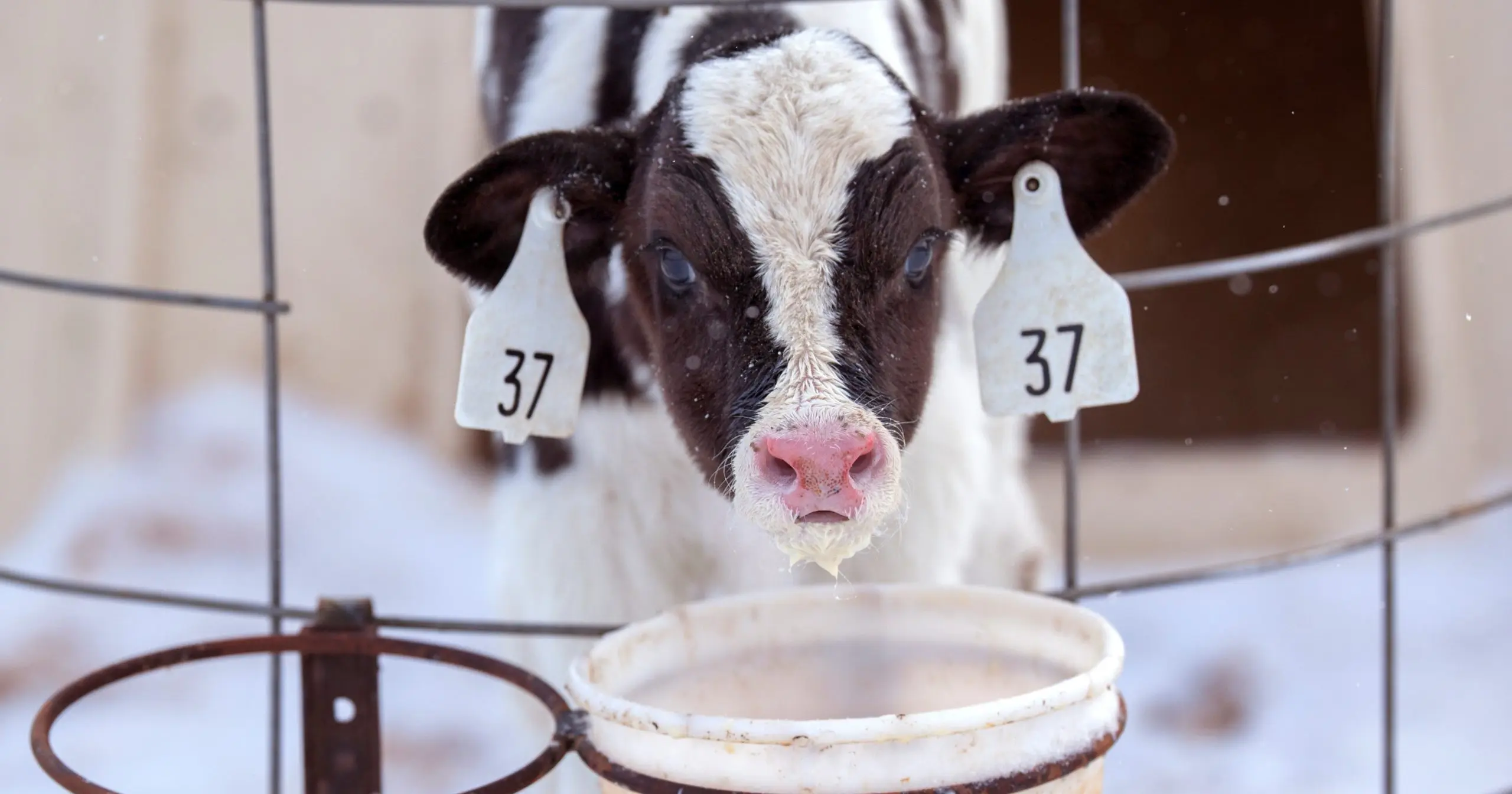
CALVES – Dr. Whitney Knauer (Associate Professor of Dairy Production Medicine, Department of Veterinary Population Medicine, University of Minnesota) says a critical period for a young calf is the first 24 hours of life. “When a calf is born, the important thing (after making sure the calf is healthy and breathing) is to get that calf dry as soon as possible. Calves lose body heat quickly when wet. They chill quickly and may not want to nurse, and also may suffer frostbite. Frostbitten ears in pre-weaned calves, usually means they weren’t dried soon enough after birth,” she says.
Air is a wonderful insulator. You want the calf’s hair dry and fluffy, with tiny air spaces between the hairs. There is not as much heat loss from the body, compared with a wet hair coat lying down flat on wet skin.
“If allowed, the cow can do a great job of licking the calf and removing birth fluids but then the best practice is to get the calf into a warm place like a warming room or warming box. This gives the newborn calf a chance to adjust.” It won’t be as much of a shock as going from the warm uterus to a cold outdoor environment.
Getting colostrum into calves quickly is crucial. Besides all the IgG components that immediate protection from disease, colostrum contains a much higher fat content than regular milk, and fuel for the calf to generate body heat.
“A newborn calf may only have a couple hours’ worth of energy reserve, so we want to get colostrum into the calf as soon as possible. It needs to be fed at calf body temperature (about 102° F),” says Knauer.
Once the calf is dry and through the first critical 24 hours, another option to help maintain body heat is a calf jacket. “Calf jackets should be placed on calves within the first day of life, after the calf is dried and before moving to a hutch or barn environment. A good rule of thumb: when the night and day temperatures together equal 90 degrees or less (such as 35 degrees at night and 55 degrees in the daytime, or colder) a calf that’s only 3 weeks old or younger should wear a calf jacket,” says Knauer.
“In one study, skin surface temperature was higher in calves wearing jackets. In addition, in the week following jacket removal, calves previously wearing a jacket had a slump in feed conversion efficiency and average daily gain, indicating that the jackets were helping maintain body temperature. These results indicate that jackets can help calves maintain body temperature, potentially improving calf welfare,” she says.
Calf jackets can be removed when a calf is able to maintain body temperature, or at about 4 weeks of age. “A calf experiences cold stress when the ambient temperature falls below her thermal neutral zone, below the temperature at which she has to expend energy to keep herself warm. We consider that critical temperature to be about 60° F in a young calf (with a range of 50° to 72°F). When calves get to about a month of age, that critical temperature changes to about 32° F (freezing). This can also depend on calf housing strategy (barn vs. hutch),” she explains.
The environment of the calf during those first few weeks of life is important. Hutches can do a great job of keeping calves warm as the calf’s own body heat can help maintain hutch temperatures in a comfortable zone. Jersey calves (being smaller) have a harder time as they have more surface area (and more heat loss) for their volume compared to a Holstein.
Supplemental heat can be provided in a barn setting. “It’s also important to avoid drafts while maintaining proper ventilation. This is often a fine line, but closing up a barn is not beneficial. We need fresh air for those calves,” says Knauer. Otherwise, air quality is poor, with dust and ammonia, which can irritate the lungs.
Bedding is another important consideration in cold weather. “Calves spend most of their time (80% or more) each day lying down and need a comfortable, dry, warm place to lie. Bedding that insulates the calf, such as straw, is preferred in winter. Ideally, we want bedding deep—at least 4 to 6 inches—so she can nestle into it,” says Knauer.
“We can actually do a nesting score to evaluate the calf’s ability to snuggle down into the bedding. We want to see a score of 2 (legs totally covered with straw bedding) in winter, as this helps insulate and also reduces air movement around the calf, helping her maintain her body temperature.”
One test you can do is to kneel in the straw or bedding. “If your knees warm up, the bedding is adequate. If your knees stay the same, that’s probably OK, but if your knees get cold, the bedding is not sufficient to keep the calves warm,” says Knauer. If your knees are wet when you stand up, that is also a problem. A wet calf is a cold calf.
Another consideration for winter calf management is meeting extra nutritional requirements. For every degree F that a calf is below her thermal neutral zone, she needs 1% more energy just for maintenance requirements (not growth, just maintaining). “For example, when we go from 60° F down to freezing, a calf needs 30% more energy and we must feed her more. We can change the composition of the milk replacer (adding more fat and energy) or by simply feeding more milk,” says Knauer.
“We recommend adding a third feeding. If you’re feeding 3 quarts twice a day, we recommend feeding 3 quarts 3 times per day. Sometimes it’s a challenge from a labor perspective to add that feeding, but it’s really important for calf health and performance during winter months. Energy is not only important for growth but also for immune function—to enable calves to fight off scours and pneumonia pathogens. They really need the extra energy during this time,” she explains.
“After calves reach 4 weeks of age, they are typically over the most critical period for cold weather challenges. At this point, we want to make sure they are getting enough energy through milk and starter. By the time they are weaned, they can more easily tolerate colder temperatures with fewer negative consequences.”
Follow us on Facebook! American Dairymen | Facebook