What a Good Eye Misses
What a Good Eye Misses
Lameness and lost condition build before a cow shows them. A camera at the parlor exit now scores every cow as she walks out.
Anyone who works around cows can spot the one that’s dead lame. It’s the cow just starting to favor a foot that gets missed.
On many dairies, mobility scoring day is a fixture. Someone walks the pens, scores the cows on the locomotion scale and logs the numbers in a spreadsheet or the herd software. It is good practice. It is also periodic by nature: a snapshot of each cow, through one pair of eyes, on one day.
Between those days, herds run on the trained eye, and the eye misses more than most people would guess. In New Zealand, DairyNZ research from 2023 found that farmers identify only 27% of the lame cows in their herds. Early lameness is subtle: a stride a touch shorter, a little less weight on one foot, a cow a step slower to the gate than last week.
The trouble starts before the limp does. By the time a cow shows visible signs, lameness has been developing for a while. Body condition drifts the same way, and it is still mostly assessed by eye, from time to time.
Scoring by eye also competes with everything else going on in the parlor. At 500 cows milked twice a day, that’s 1,000 exits to watch, every day, by a crew that is also milking, moving cows and running the shift. The person with the best eye isn’t on every shift, and what they know about a cow doesn’t always make it onto the whiteboard.
“Locomotion scoring tells you where a cow was on the day you scored her,” said Nicole Mozeliak, CEO of Herd-i US. “The question for the farmer is where she’s heading.”
A Second Pair of Eyes
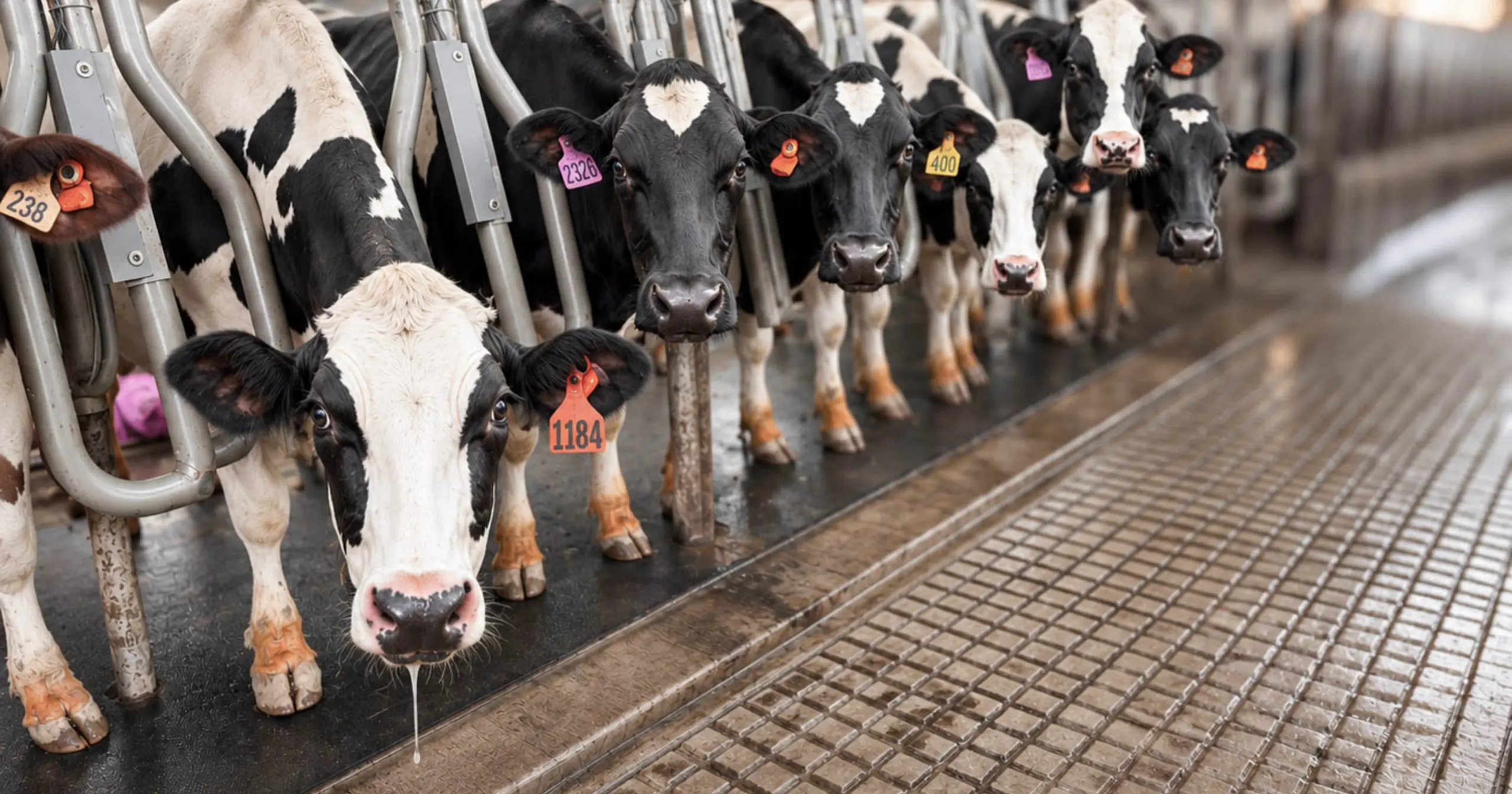
Herd-i’s approach is to score every cow. Cameras at the parlor exit record each cow as she walks out after milking, and each cow is identified by her EID tag. The video is analyzed in the cloud, and every cow is given a lameness score and a Body Condition Score (BCS). Nothing is fitted to the cow, and nothing changes in the milking routine.
Farmers see every score, trend and video on an online dashboard. They set their own thresholds and can share the data with their veterinarian, nutritionist and farm team. The idea is to identify subtle changes in gait and condition early, so a cow whose score slips Monday and slips again Wednesday gets a look Wednesday, not Saturday. It also frees up time spent scoring by eye, and gives nutritionists body condition trends to work from when they adjust a ration.
Those thresholds mean the system identifies cows against the herd’s own treatment line, not a one-size-fits-all cutoff. And with the vet and nutritionist looking at the same trends as the farm team, the conversation at the next herd check starts from data rather than recollection.
The scores are built on expert judgment. The lameness models were trained with Healthy Hoof certified veterinarians, and the body condition models on 1.12 million videos assessed by Gold Standard BCS Assessors, so the scores reflect how a trained professional would score.
The scores have also been put to the test on farm. When Canterbury, New Zealand, sharemilker John Frew started using Herd-i’s body condition scoring, he asked his vet to score his 840-cow herd independently. “The vet had the herd at about 4.3 and Herd-i was 4.34,” Frew said. Two seasons on, it has changed how he manages his time. “I don’t have to be here to know what’s going on.”
“Your best herdsperson still knows things no system will,” Mozeliak said. “We’re making sure they know which cow to go and look at first.”
Retrained for the U.S. Holstein
Herd-i started in 2019 and has been commercial since 2021. It has generated more than 60 million lameness scores on working dairies. That’s real herds and real parlors, not a research herd.
American dairies have their own cows, parlors and management, so Herd-i built a U.S. version for them. In 2026, Herd-i retrained its models on U.S. Holstein herds through on-farm pilot installs, so the scores reflect U.S. cows, U.S. parlors and U.S. management. The U.S. models launched to dairies Sept. 9.
The longest record is in New Zealand. South Island farmer Heine Cronje has used Herd-i for four seasons. He sets it to flag cows half a score earlier than standard, so his team can step in with trimming or blocks before a cow is obviously lame. “I know precisely how many lame cows we have,” Cronje said.
An independent AgFirst study of a 950-cow Holstein Friesian herd in New Zealand compared three seasons before and after installation. It found a 38% reduction in cows needing lameness treatment and a 41% reduction in antibiotic treatments for lameness: on average, 82 fewer cows treated and 40 fewer antibiotic treatments per season.
The Founding 25
With the technology proven, Herd-i is now rolling out across U.S. dairies, starting with its first American partners. The Founding 25 program invites 25 U.S. dairies to come in first. In return for complimentary installation and a founding rate, Herd-i wants their feedback on how it fits American herds and parlors. Places are limited.
“This is proven technology. Now it’s about rolling it out on U.S. dairies,” Mozeliak said. “The farmers who come in first will shape how it works here.”
Dairies interested in a founding place can find out more at herd-i.com/us.
Follow us on Facebook! American Dairymen | Facebook