Colostrum: Are We Getting All We Can Out of It?
Colostrum: Are We Getting All We Can Out of It?
We know the importance of that first feeding. But what about the milk that follows?
Dairy producers have heard plenty about colostrum over the years. Get it into the calf quickly, make sure it’s good quality and feed enough of it. There’s good reason for all that attention, and I doubt anybody would argue otherwise.
But I’ve been looking at some research that raises another question. What are we doing with the milk from the next few milkings, and could we be getting more out of it?
Most dairies have established procedures for handling that first colostrum. What happens afterward varies quite a bit. Some feed transition milk to their calves, while others have different arrangements for collecting, storing or disposing of milk that can’t yet go into the bulk tank.
It turns out there may be more value in that milk than we’ve given it credit for.
Maybe We’ve Been Too Focused on the First Feeding
The importance of colostrum has traditionally centered on getting antibodies into the newborn calf before its ability to absorb them declines. That’s still essential.
But colostrum contains considerably more than antibodies. There are growth factors, proteins, fats and other substances that may influence how the calf’s digestive and immune systems develop.
And those substances don’t simply disappear after the first milking.
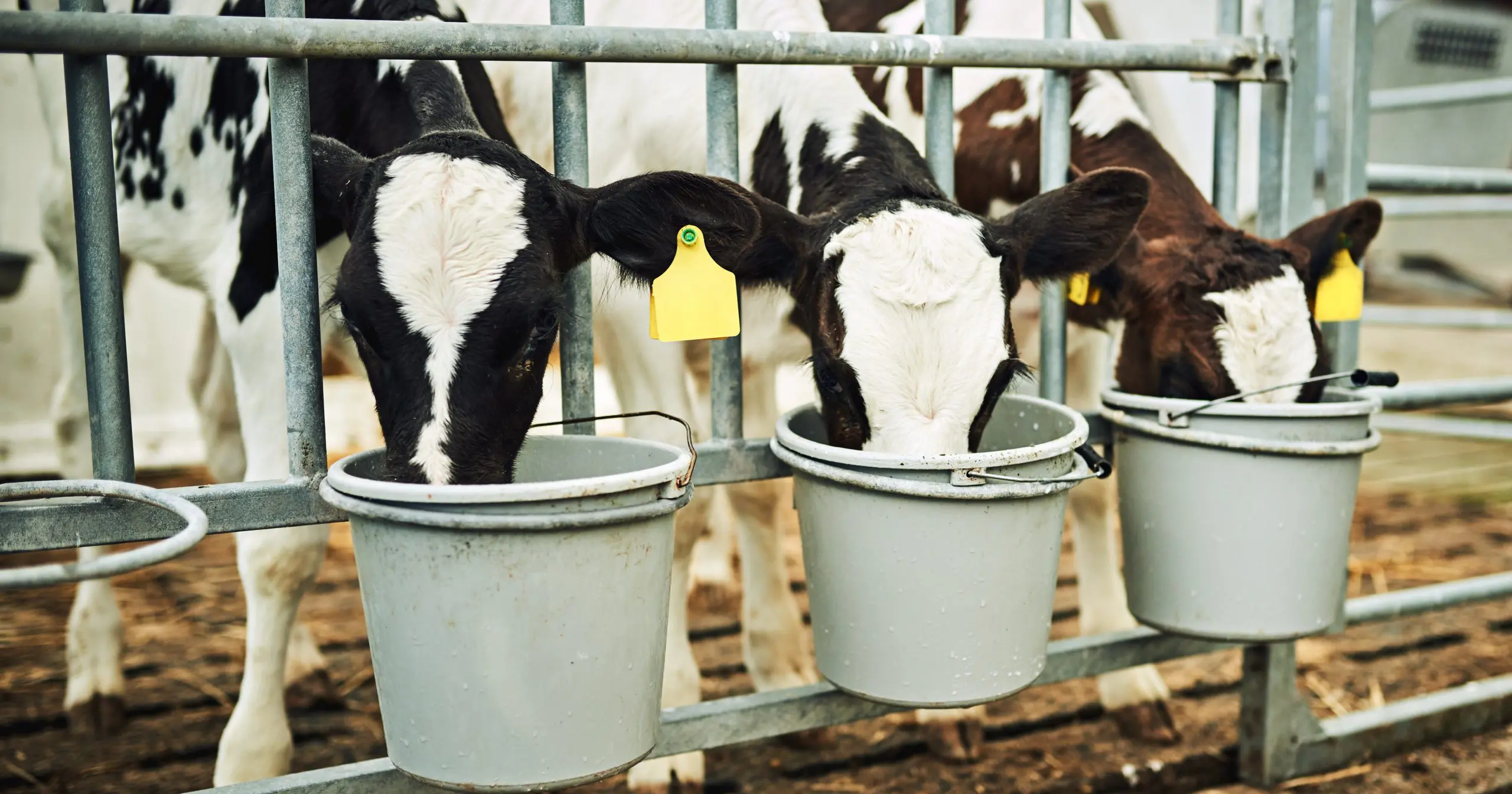
The milk produced during the next several milkings, commonly called transition milk, still contains many of them. Researchers have been looking at whether calves benefit from receiving that milk instead of moving immediately to a conventional milk-feeding program.
Some of the findings are worth considering.
What Happens When We Keep Feeding It?
Researchers at Michigan State University have examined what happens when calves receive transition milk during their first few days.
One study found greater development of the intestinal lining in calves receiving transition milk than in calves fed milk replacer. That’s interesting because the intestine is where the calf absorbs the nutrients it needs to grow.
Another study involving 105 Holstein heifer calves found that those receiving transition milk or milk replacer supplemented with colostrum replacer during days two through four gained approximately 6.6 pounds more by 56 days of age than calves receiving milk replacer alone.
Now, I wouldn’t rush out and promise every dairy another six pounds of calf. The feeding programs differed in their nutrient and energy content, which could explain part of the advantage. Other researchers haven’t always found the same results.
Still, there’s enough evidence to make me wonder whether we’re moving away from colostrum and transition milk sooner than we should.
And growth isn’t the only consideration.
A 2025 review by researchers David Renaud and Michael Steele examined studies involving colostrum feeding beyond the first day. Some reported improvements in certain measures of calf health, while others found little difference.
We all know what sick calves cost. Between treatments, labor and lost growth, it doesn’t take many problems to make a calf-raising program expensive.
If feeding transition milk longer helps reduce some of those problems, I’d certainly want to know about it.
What Are We Doing With That Milk Now?
Here’s where I think the discussion gets interesting.
Every dairy produces transition milk. Depending on how the operation handles fresh cows, some of it may already be going to calves. Some may be stored, and some may be discarded because it isn’t suitable for the bulk tank.
Before we spend money trying to improve a calf-feeding program, perhaps we ought to look at what we’re already producing.
Could some of that milk be put to better use?
Of course, collecting and storing it isn’t free. There are labor costs, refrigeration requirements and sanitation concerns. Milk that isn’t handled properly can create more problems than it solves.
Pooling milk from several cows also raises questions about disease transmission, and that’s something I’d want to discuss with the herd veterinarian.
But for a dairy that already has the equipment and procedures to handle waste milk or transition milk, it seems worth examining.
The milk is there. The question is whether there’s a practical and economical way to make better use of it.
There’s an Opportunity for Colostrum Products, Too
Not every dairy has the facilities or labor to collect and store transition milk separately. And even those that do may not have a consistent supply.
That’s where commercially available colostrum products deserve consideration.
There are colostrum replacers, supplements and other products designed for different purposes. Some are intended to provide antibodies immediately after birth, while others may be used as part of a feeding program during the following days.
I wouldn’t assume they’re all interchangeable.
Before purchasing a product, I’d want to know what it’s intended to accomplish, how much to feed, what it costs and whether there’s research supporting its use beyond the first feeding.
There are companies doing considerable work in this area, and dairy producers would be wise to take advantage of the information they can provide.
The important thing is finding a program that makes sense for the individual operation.
And What About Beef-on-Dairy Calves?
We’ve talked a great deal about the growing value of beef-on-dairy calves, and that raises another question.
Are we giving those calves the same attention during their first few days that we give our replacement heifers?
A beef-cross calf needs the same good start. It still needs adequate colostrum, proper nutrition and careful management.
But the economics can be different.
If a dairy sells its calves at three or four days old, there may be little opportunity to recover the additional expense of an extended feeding program. A producer raising those calves through weaning has more time to see whether improved growth or health justifies the investment.
And the research isn’t far enough along to assume that every benefit observed in Holstein heifers will be identical in beef-cross calves.
I suspect this is an area where we’ll see considerably more work in the coming years, particularly as beef-on-dairy becomes a larger part of the cattle business.
Is It Worth Changing What We’re Doing?
I wouldn’t suggest changing a successful colostrum program simply because a new study came along.
But I would take another look at what happens after that first feeding.
Before making changes, I’d take a closer look at how we’re handling transition milk and whether we’re getting the most value out of it. There may be opportunities to improve calf performance using milk we’re already producing, or through commercially available products. But any changes need to make economic sense. The benefits have to justify the additional feed, labor and management costs.
Those are questions worth discussing with the people responsible for calf care and with the herd veterinarian.
If a dairy decides to try something different, I’d want to keep track of the results. Calf weights, health treatments, feed costs and labor are all part of the picture.
We may discover that our present program is doing exactly what it should.
Or we may find there’s an opportunity we’ve been overlooking.
Either way, I’d rather make that decision knowing what the milk from those next few milkings might be worth.
Follow us on Facebook! American Dairymen | Facebook