Hoof Management
Hoof Management
Maintaining hoof integrity is a critical foundation of every dairy. When a cow experiences foot discomfort or lameness, her behavior shifts; she will typically spend less time at the feed bunk and more time lying down to alleviate pressure. This will lead to a drop in milk production. To protect the herd’s health and the farm’s bottom line, dairymen must shift to proactive maintenance, addressing potential issues before they develop into lameness.
Common Hoof Problems
Lameness in dairy cattle often starts with small issues that grow into big problems. Foot rot is a common infection caused by bacteria in wet or dirty bedding. It makes the skin between the toes red and swollen. You treat this by cleaning the area and using a footbath. If it doesn’t get better, you may have to call a vet for additional attention. Digital dermatitis is another big issue also known as hairy heel warts. These look like raw red sores on the back of the heel. They are very painful and spread fast through a herd. You can treat these by spraying the feet with a special wash or using a wrap with a copper mix.
Sole ulcers are a different kind of problem that comes from too much pressure inside the hoof. These look like a hole or a bruise on the bottom of the foot. To treat an ulcer, a trimmer will glue a block to the healthy side of the hoof. This lifts the sore side off the ground so it can heal. White line disease happens when the wall of the hoof pulls away from the sole. Dirt and rocks get stuck in the gap and cause an abscess. A trimmer must cut away the loose horn to let the pus drain out. Keeping floors clean and using dry stalls will stop many of these problems before they start.
Trimming
Hoof care and prevention should start with regular hoof trimming. Proper hoof trimming is an essential part of preventing lameness in dairy cattle. Research from the University of Kentucky estimates that lameness costs approximately $185 per clinical case in first-lactation cows and about $333 per case in mature cows (Reichenbach & Amaral-Phillips, n.d.). Regular hoof trimming helps reduce both structural and bacterial-related lameness by keeping proper hoof shape and reducing exposure of weakened hoof tissue to bacteria found in manure.
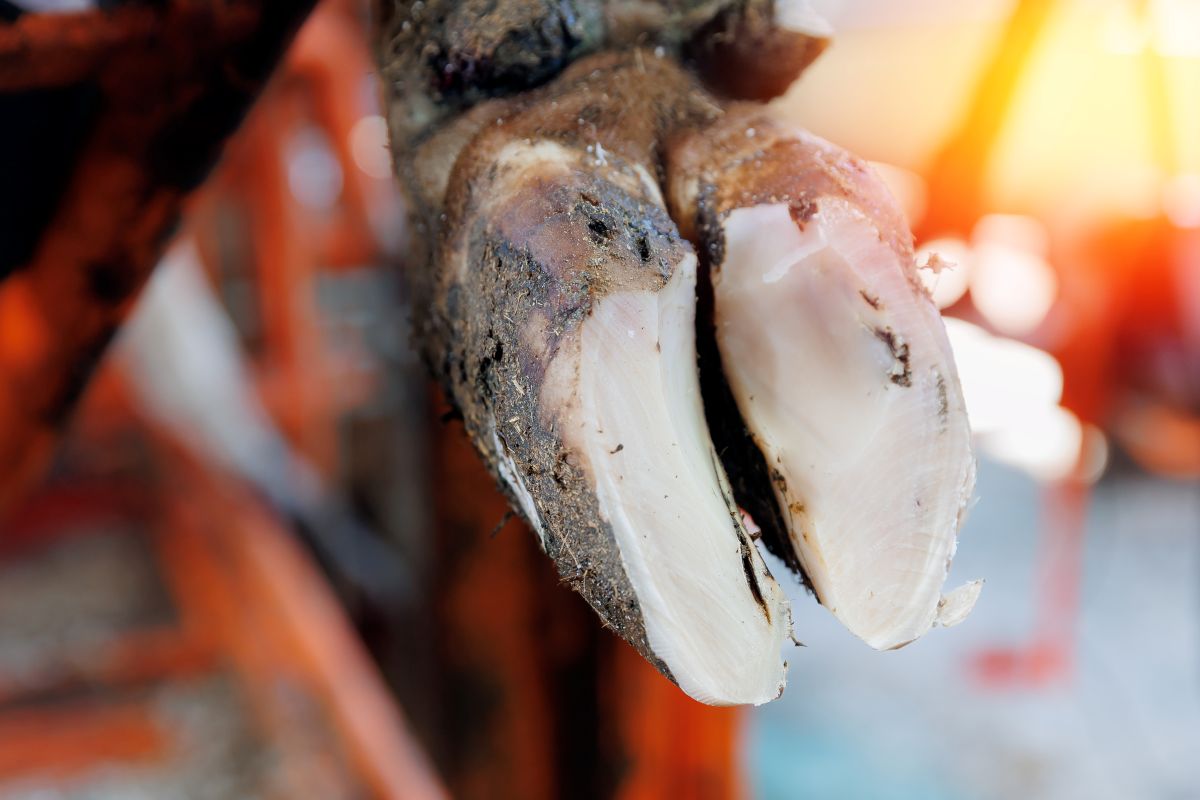
Hooves grow roughly two inches per year. The outer portion of the hoof supports cattle weight. When weight is unevenly distributed away from this area, cows become more prone to lameness. Trimming helps correct hoof structure and supports proper weight distribution and reduces stress on the legs and feet.
Most dairy herds benefit from hoof trimming twice per year. Semi-annual trimming serves as routine maintenance, while trimming after signs of lameness can act as corrective treatment. Infectious hoof diseases, such as digital dermatitis (hairy heel warts), may require more frequent attention because bacteria thrive in manure slurry and can invade weakened or poorly structured hooves. However, over-trimming should be avoided because removing too much hoof can expose sensitive tissue and cause pain.
Many farms implement trimming schedules around key production stages, such as at dry-off and again at around 100 days in milk, although any consistent twice-yearly schedule can be effective.
Flooring
Maintaining healthy hooves starts with the ground. It’s best to keep cattle comfortable and out of mud and manure. When cows stand in mud or manure, their hooves become soft. Soft hooves pick up germs and wear down too fast. Scraping the aisles many times a day keeps manure away from the feet. This simple step stops many infections before they can start.
The type of floor a cow walks on every day plays a huge role in hoof health. A good floor must provide enough grip so the cow does not slip, but it must also be soft enough to prevent bruising and wear. Rubber is one of the best choices for areas where cows stand for a long time. It is much softer than stone or concrete. When a cow stands on rubber, the material pushes back gently, which helps the blood flow through the hoof. Many farms put rubber mats in the milking parlor and at the feed bunk. This keeps the cows comfortable while they eat and work.
Concrete is a staple we see in a lot of dairies; it keeps cattle out of mud and can be cleaned easily. Sand is another bedding choice that can be relatively inexpensive and helps keep feet dry. A dry floor is a healthy floor.
Footbaths
Footbaths are a key tool for every dairy farm. As cows walk through it, the footbath mix kills bacteria and hardens the hoof skin. The most common chemicals used in these baths are copper sulfate or formalin. Copper sulfate works by killing bacteria and making the hoof skin much tougher. Formalin is a clear liquid that is very strong at killing germs. Some farms also use zinc sulfate or special soaps to help break down the mud and manure on the skin.
A footbath works through two main steps. First, the water washes away the dirt that hides bacteria. Second, the chemicals soak into the hoof and the skin around the heel. This creates a shield that stops new germs from getting inside. For the bath to work well, the water must stay clean. Using a footbath keeps the herd strong, and helps prevent hoof problems.
Balanced Diet
The diet of the cow also plays a big role in hoof health. Cows need the right balance of minerals like zinc and biotin. If a cow eats too much grain and not enough hay, her blood can change. This change can cause pain in the feet. A steady diet with plenty of fiber supports a healthy gut biome and in turn, keeps the feet hard. It is better to use a Total Mixed Ration, or TMR. This is a mix where every bite has the right amount of hay, grain, and minerals. This keeps the cow’s body steady and her feet healthy. Working with a knowledgeable dairy nutritionist can help you find the right mix.
Putting It All Together
A successful dairy depends on the strength of its cows’ feet. When dairies take a proactive approach, they prevent lameness and loss of production. Preventing lameness is not just about animal comfort; it is a vital part of keeping a farm profitable. By staying ahead of issues through regular trimming, clean flooring, and the consistent use of footbaths, you can stop small infections from turning into costly problems.
When you combine these physical steps with a balanced diet full of key minerals, you build a herd that is more resistant to disease. Taking a proactive approach ensures that cows spend less time lying down in pain and more time at the feed bunk. Ultimately, a focus on hoof health leads to longer lives for the cows and more milk in the tank.
Sources:
Reichenbach, H. B., & Amaral-Phillips, D. M. (n.d.). Hoof trimming of dairy cows. University of Kentucky, Department of Animal & Food Sciences. https://afs.mgcafe.uky.edu/content/dairy-hoof-trimming-dairy-cows
May 2026
By Jessica Graham