How Efficiency Puts Money in Your Pocket
How Efficiency Puts Money in Your Pocket
By Jaclyn Krymowski
There are many cogs that impact how efficiently the wheel of a dairy farm moves. For instance, feed efficiency (the measure of how efficiently a cow converts a certain amount of feed into a product) is just a small aspect of the operation’s production efficiency. Other factors would be labor, general animal welfare and even farm resources like land or facility space.
The term “efficiency” is often causally tossed around as an ideal, but it can be tough to define. But with more economic pressures facing dairy farmers, becoming more “efficient,” and getting the most out of your time and money is inarguably worth paying more attention to. Think of it along the lines of “improving efficiency allows dairy farms to produce more value from the resources they already have.”
What it looks like on the modern dairy farm
Efficient cattle can be broken into a few different categories. But when it comes to cows, the general idea is to produce more milk or be more profitable (by way of fertility or longevity) with less feed inputs. Another way might be to have a smaller, but more productive, herd instead of increasing the headcount of below-average milk producers. This can be done by improving genetics along with greater feed efficiency.
As one of the single largest expenses, feed plays a major role in efficiency. This takes the form of adjusting total rations, changing forage quality or reducing feed waste.
A close rival to feed costs is labor.
The labor dilemma
Labor availability and cost remain among the biggest challenges facing dairy operations of any size. But there are several levers to pull in improving labor efficiency, from automation and technology to even reworking your barn layout. Robotic milking, automated feeding and activity and health monitoring systems all fall under this umbrella of technology built to save time.
But there are other less expensive ways as well. Efficient barn and milking layouts, standard operating procedures, and consistent employee training round out the non-technology side of the equation.
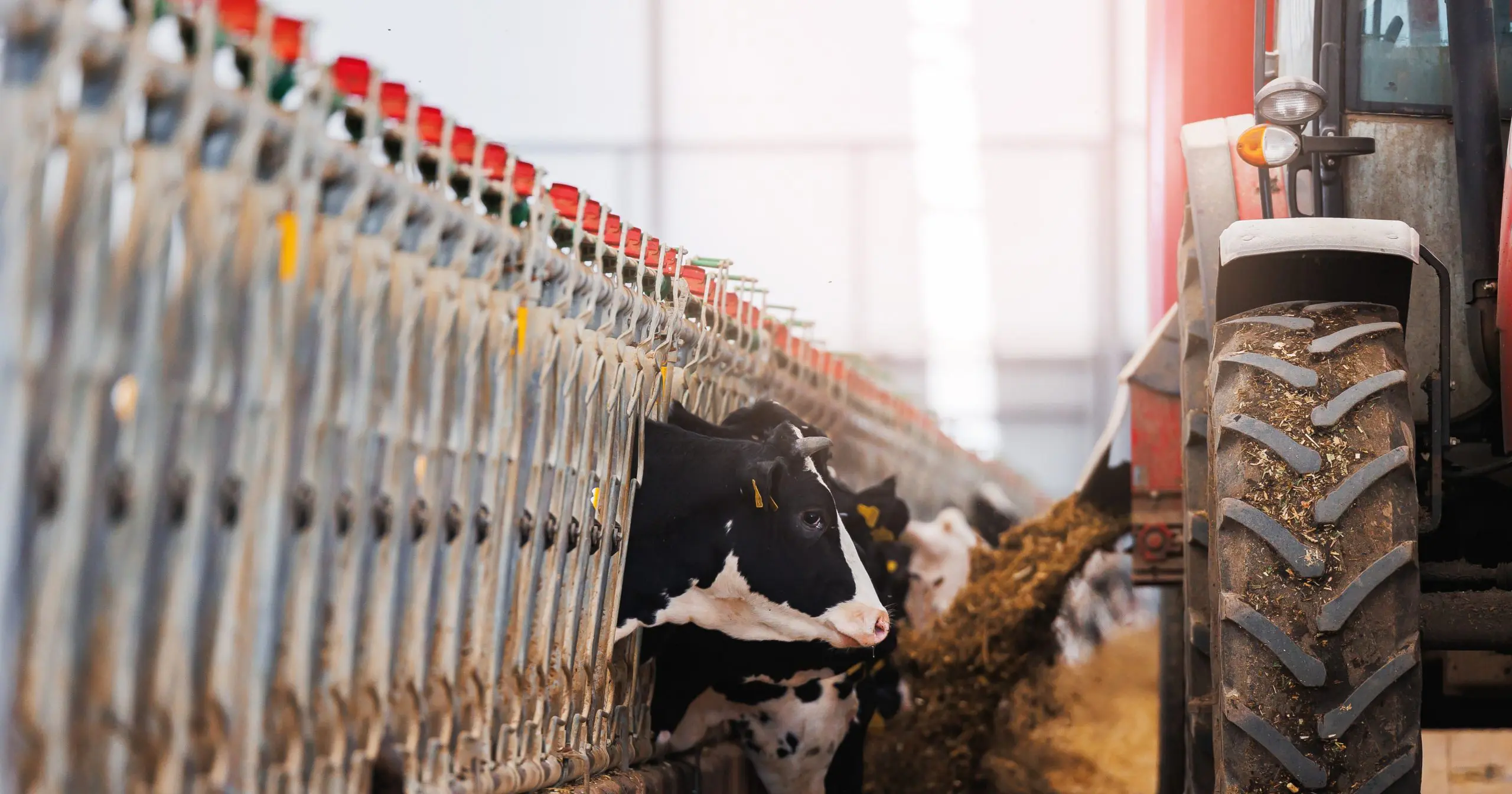
“Labor efficiency on dairy farms is a critical measure that impacts cost of production as well as the farm’s work environment,” writes Phil Durst of Michigan State University Extension in his bulletin Dairy Farm Labor Efficiency. “Surveys from the U.S. Department of Agriculture (USDA) have identified economies of scale and lower unit costs as herd size increases. In general, larger farms often use larger equipment, reducing the field work hours and increasing the output per person. Feeding a longer line of cows doesn’t require an additional person, delivery tractors, or mixer.”
That doesn’t mean smaller operations are without options. Even without the scale advantages of a larger herd, farms of any size can find gains through better organized workflows, cross-trained employees and making equipment improvements as needed.
Herd health and reproduction
Healthy cows are more productive cows, and they require fewer costly interventions along the way. Preventive health programs matter here more than almost anywhere else on the farm, since they encourage building healthy, strong replacements from the ground up.
Proper transition cow management and timely reproduction also reduces disease and culling. Smart selection decisions can help lower the cull rate and, at the same time, help identify and retain the herd’s top performers. The economic impact of improving pregnancy rates, longevity, and milk production adds up quickly, and healthy cows contribute directly to farm profitability in ways that are easy to overlook compared to more obvious factors like feed and labor.
Energy and water use
While it may not always be the most convenient route to take, cutting back on energy inputs can help reduce the overall cost of business. This is a category that can’t easily be done all at once, but making small tweaks here and there will eventually relieve some strain.
Practical ways include using more energy efficient lighting or heat recovery systems. You might also evaluate your manure management and water systems to see if there’s upgrades you can make that will save both time and resources. There are also outside-the-box ways to get better milage out of them, including anaerobic digestors or sand lanes.
It’s worth noting there is a distinction here between cutting costs and actually improving efficiency. The first often means doing without, while the second has the mindset of getting the same or better output from fewer wasted inputs.
Use data to make decisions
Using objective data can be one of the most helpful tools in making sound management decisions. Investing in the collection of reliable data can help call out points of weakness or highlight areas to improve herd efficiencies before they become bigger problems.
That investment can end up helping the overall bottom line, since it provides the information needed to align inefficiencies with a clear objective. There may be some upfront costs to make the improvements, but it tends to pay off in the long term.
Modern dairy farms generate large amounts of information. Some of the most valuable areas for data collection include milk production, feed conversion, somatic cell count, reproductive performance, herd turnover and cost per hundredweight.
Feed efficiency, income over feed cost and pounds of energy corrected milk per pound of dry matter intake are commonly watched data points on any dairy, but none tell the whole story on their own.
“While evaluating feed efficiency and income over feed costs together provides a more complete picture than either metric alone, it’s important to recognize there are still limitations,” writes University of Wisconsin-Madison dairy outreach specialist Katelyn Goldsmith in the bulletin Evaluating Feed Efficiency with Profit in Mind. Factors like milk components, feed price swings, and shifts in dry matter intake can move both numbers independently of any real gain or loss in efficiency.
None of this comes without obstacles. High upfront investment, technology and management learning curves, and real differences between individual farms all shape what’s realistically achievable on a given operation.
There’s also a genuine risk of investing in technology without a clear economic benefit attached to it. Matching improvements to the farm’s size, goals, and available resources is what separates a smart investment from an expensive lesson.
There’s no doubt that the dairy business is trending toward greater use of automation and precision technology, along with artificial intelligence and more advanced data analysis. These tools can help provide the kind of objective data that drives sound farm management decisions. Improved genetics and nutrition, along with more efficient use of feed, land, water and energy, are likely to remain high priorities.
But remember, no individual efficiency can tell the whole picture, so it’s best to evaluate each of the efficiencies (or inefficiencies!) thoroughly to make sure the picture being drawn is an accurate one. Making efficiency pay, in the end, means turning better management, better technology, and better use of resources into improved farm profitability.
Follow us on Facebook! American Dairymen | Facebook