Managing Fly Infestations By Location
Managing Fly Infestations by Location: Identification, Prevention, and the 30/30 Approach
Flies are more than just a nuisance around cattle operations. They directly affect animal health, productivity, and overall profitability. From spreading disease to reducing feed efficiency and milk production, these pests can inflict significant losses if not properly managed. Effective fly control requires understanding which species are present, implementing location-specific solutions, and applying proven preventative strategies, such as the 30/30 approach.
This article combines insights from experts and proven practices to guide producers in managing fly infestations based on where cattle are raised, while emphasizing integrated pest management (IPM) and the critical role of feed-through products, such as ClariFly® Larvicide.
Why Fly Management Matters
Flies thrive in the very environments where cattle live, feed, and produce waste. They breed in manure, spilled feed, silage, and other organic material, allowing populations to increase rapidly. Beyond being irritating, flies cause measurable harm:
- House flies spread diseases like mastitis and cause stress to cattle.
- Stable flies inflict painful bites, lowering feed intake and productivity.
- Face flies transmit bovine pinkeye, especially in northern regions.
- Horn flies drain billions of dollars from the U.S. cattle industry annually through lost production and control costs.
A single female house fly can lay 150 eggs at a time, while horn flies may take 30–40 blood meals per day from a single animal. Left unchecked, infestations escalate quickly, putting cattle health and profitability at risk.
That’s why successful programs don’t rely on a single tactic. They combine identification, targeted products, sanitation, and seasonally timed control strategies.
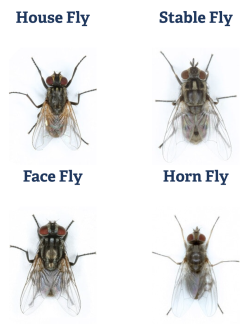
Identifying the Flies That Threaten Your Herd
The first step in managing flies is knowing which species are present. Different flies thrive in different environments, attack animals in unique ways, and require targeted solutions
House Fly
- Appearance: Dull gray, four stripes on thorax, pale yellowish abdomen.
- Behavior: Breeds in manure, waste, and garbage. Populations increase rapidly.
- Impact: Spreads diseases and stresses livestock.
Stable Fly
- Appearance: Checkerboard pattern on abdomen, dull gray coloring.
- Behavior: Aggressive blood-feeders on animals and humans. Breeds in grass clippings, compost, and fecal material.
- Impact: Painful bites reduce feed intake and causes weight loss.
Face Fly
- Appearance: Four thoracic stripes, yellow/orange abdomens on males.
- Behavior: Congregates on cattle faces, feeding on secretions around eyes, nose, and mouth. Breeds in fresh, undisturbed manure.
- Impact: Spreads pinkeye and other bacterial infections.
Horn Fly
- Appearance: Small, gray, two thoracic stripes.
- Behavior: Clusters on cattle backs, feeds on blood up to 40 times per day. Females lay eggs in fresh manure.
- Impact: Reduces weight gain, feed efficiency, and milk yield.
Correctly identifying these pests allows producers to implement tailored strategies that target their specific life cycles and breeding sites.
Fly Control by Location
Because cattle operations vary widely, from confined dairies to wide-open pastures, fly management must be location specific. Feed-through solutions from Central Life Sciences, such as ClariFly® Larvicide, are particularly effective when paired with an IPM program designed for the specific conditions in which cattle are kept.
Confined Operations: Dairies and Feedlots
In confined environments where cattle are grouped together, organic matter builds up quickly. Spilled feed, silage, and manure provide ideal breeding grounds for multiple fly species.
Solution:
- ClariFly® Larvicide is a feed-through product that prevents larvae of house flies, stable flies, horn flies, and face flies from maturing in manure.
- By targeting flies at the larval stage, it reduces adult populations before they emerge.
- Its broad-spectrum control is especially valuable in confined settings where all four species may be present.
Best Practices in Confinement:
- Keep pens, feed bunks, and alleys clean to reduce breeding sites.
- Incorporate Starbar® baits, traps, pour-ons, and sprays to target adult flies.
- Pair ClariFly® Larvicide with sanitation for maximum effectiveness.
Pasture Operations
Pasture-raised cattle are particularly vulnerable to horn flies, which stay on the animals constantly. These pests cost the industry billions in lost productivity each year.
Solution:
- ClariFly® Larvicide is a feed-through product that prevents larvae of horn flies, from maturing in manure.
- As a feed-through, it provides continuous protection without the need for labor-intensive fly sprays or tags.
Best Practices on Pasture:
- Monitor cattle regularly for horn fly loads (look for clusters on backs and sides).
- Apply ClariFly® Larvicide consistently throughout the fly season.
- Supplement with sprays or pour-ons during peak infestations if necessary.
By tailoring the approach to the location, whether confined lots or pastures, producers can more effectively reduce fly populations while minimizing labor and costs.
The Role of Integrated Pest Management (IPM)
No single tool can eliminate flies. The most effective programs use an Integrated Pest Management (IPM) strategy that combines feed-through products, sanitation, and supplemental controls.
Core IPM Principles:
- Sanitation: Remove old feed, compost, and manure buildup where flies breed. Eliminate standing water and weeds near facilities.
- Multiple Control Methods: Use feed-through larvicides to target immature flies, and traps, sprays, or baits to reduce adult populations.
- Customization: Adapt strategies based on operation type, region, and dominant fly species.
IPM not only reduces fly pressure but also prevents resistance, which can occur when relying on a single product or method.
The 30/30 Approach: Timing Matters
Even the best products won’t work if they’re not applied at the right time. That’s where the 30/30 approach comes in —a proven guideline from Central Life Sciences for maximizing the impact of ClariFly® Larvicide.
How It Works
- Start early: Begin feeding ClariFly® Larvicide 30 days before average daily temperatures reach 65°F.
- Extend coverage: Continue feeding until 30 days after the first frost in fall.
This timing ensures that overwintering fly pupae are controlled before they emerge in spring. Since flies are among the first pests to take advantage of warming weather, early action prevents herds from being overwhelmed at the start of the season.
Why It’s Effective
- Stops the first wave: By controlling flies before they hatch, populations are reduced for the entire season.
- Adapts to weather: Accounts for variable spring warm-ups and unpredictable fall frosts.
- Improves efficiency: Keeps programs on schedule, preventing the “catch-up” struggle when flies appear earlier than expected.
When combined with sanitation and other IPM tactics, the 30/30 approach helps producers stay ahead of infestations, keeping cattle healthier and more productive year-round.
Putting It All Together: A Comprehensive Strategy
Managing fly infestations successfully requires a combination of identification, prevention, and seasonally timed treatments tailored to the operation.
- Confined or Pasutured Operations: Use ClariFly® Larvicide to control multiple fly species at the larval stage. Maintain strict sanitation and incorporate adult control methods, such as Starbar® traps and sprays.
- Seasonal Timing: Apply the 30/30 approach to ensure feed-through products are active before flies emerge and after they’ve stopped breeding.
- IPM Integration: Layer sanitation, feed-throughs, and adult controls for comprehensive management.
With this multi-layered strategy, producers can protect animal health, improve productivity, and reduce financial losses associated with fly infestations.
Flies will always be part of livestock operations, but their impact can be minimized through smart, proactive management. By identifying the species that threaten cattle, tailoring solutions to the operation type, and following the proven 30/30 approach, producers can stay one step ahead.
The combination of ClariFly® Larvicide and integrated pest management tools from Central Life Sciences provides a powerful and flexible foundation for fly control. When implemented consistently and with attention to timing, these strategies not only protect animal well-being but also safeguard the profitability of livestock operations season after season.
To learn more about ClariFly® Larvicide and implementing the 30/30 approach on your operation, visit CentralFlyControl.com.
ClariFly is a registered trademark of Wellmark International.