Robotics Can Be Beneficial for Certain Dairies
Robotics Can Be Beneficial for Certain Dairies
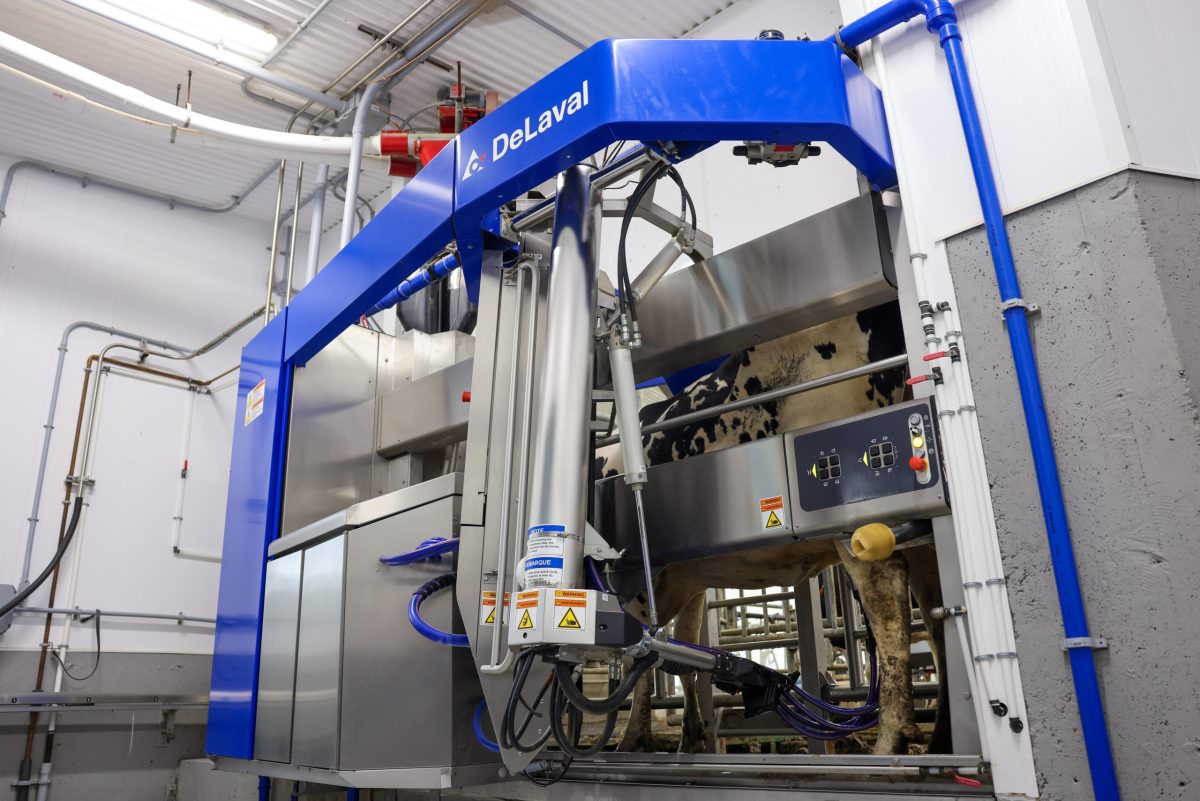
Robotic milking systems are becoming more common in the U.S., especially in the Upper Midwest and Northeast, but are also gaining popularity across the country. Dairy producers install robotics for a variety of reasons such as labor (flexibility, as well as reduction in labor costs) and quality of life for dairy owners and their employees.
Marcia Endres, PhD (Professor and Extension Dairy Specialist in the Animal Science Department at the University of Minnesota) has been working with robotics for many years. The first robotic dairy farm was in Europe, in 1992. This technology became available in the U.S. after 2000. “We have done multiple surveys that show farmers choose robotic milking mainly because of labor shortage and to improve quality of life. Especially for the smaller farms, it makes their labor more flexible; they don’t have to go milk cows at 4 a.m. and 4 p.m. They can go to their kid’s games or to a wedding; they have a lot more flexibility. It’s not that their work is actually less, but they have more flexibility,” says Endres.
“For larger farms, it’s getting harder to find people who want to or are willing to milk cows. It’s a tedious and tiring job on a large farm; you are standing up for many hours. Robotics enables the dairy to get the cows milked,” she says.
“One thing farmers might not think about is that a robot is a very sophisticated piece of equipment and requires a lot of maintenance. You need to be good with equipment and understand how to fix things yourself, to reduce maintenance costs. Some of the most successful farms have people who learn to do 80 to 90% of the repairs and they don’t have to call the company to come in very often to do this, since it costs more.” The benefit is that one robot can milk 60 to 70 cows. Each one can prep, milk and clean up that many cows. “They milk a cow about 2.8 times per day on average,” says Endres.
“You just need the mindset to understand that this is a different type of work and that you have to make sure every day that the equipment is working properly—cleaning and maintaining it–and also learn how to understand the data it provides about each cow. You can manage those cows individually, because you can understand each cow more than you ever did before,” she says.
If you know how to obtain and read the data it can be a big help. “The robots are very expensive but they are not just for milking cows; they can provide lots of data. This is a plus, but also more work because you need to learn how to use that data. Many of my students love new technology and data and have decided they want to dairy and use robots! They are comfortable with and like these sorts of things and are willing to spend the time to understand all those cows and manage them better. It takes a certain mindset, however, and robots are not the answer for every dairy farmer; it’s just another option.”
If a person trains the cows to the robots and feeds them correctly, the cows also like these systems. “It’s more comfortable for the cows because they can get milked whenever they want and you don’t need to be pushing them into the parlor to be milked two or three times a day, all at the same time. They can come and go as they want, throughout the day and night,” says Endres.
“I have been to multiple robotic farms and when you go in, the cows don’t get up; they are not bothered by humans because they are not being disturbed by people taking them to be milked. Only about 5 to 10% might not come in by themselves, and those have to be fetched,” she says.
“A fetch cow is one that for whatever reason might be a little lazy or lame and doesn’t get up and go on her own. Those cows are brought in calmly and most of the cows get used to not being bothered very much.”
There can be two different types of traffic within the barn for a robotic system, and these might lead to more, or less, fetch cows. “One system is called free flow, where cows have access to all the areas of the barn at all times. The other system is called guided flow where cows go through a gate first, and are selected to go to the milking robot if it’s time for them to be milked, and if it’s not time to be milked they go to eat. The guided flow system require less fetching because the gate helps do this for you. A few cows still need to be fetched if they didn’t go through the gates like they should, at a certain time, but you don’t fetch as many,” she explains.
“The dairy farmers don’t seem to mind fetching because they still need to go out to the barn to clean the beds—and while they are out there cleaning the beds they can see which cows need to be fetched, or just schedule fetching as needed,” says Endres.
“Once in a while the farmer will be called out in the middle of the night; someone has to be on call all the time in case something goes wrong. The robot will send a signal, like a text to your phone, or whatever, if something happens and it can’t milk the cow. It sends you an alarm signal. Most farmers tell me that if you maintain the system and keep things working properly, this kind of alarm doesn’t happen very often—maybe once or twice a month–not like every night. As long as you do your job to keep everything in good shape and check it during the day to make sure everything is working, this makes a big difference,” she says.
“Some farmers, however, don’t like the fact that they have to always be on alert—especially in the beginning when they are not used to it and wondering if they won’t be able to sleep as well because they worry that something is going to happen. They might have to get up in the night and see what the problem is. But if you are handy and can fix things by yourself, it’s easy; you just fix it right away. Most farmers are ok with that.”
She thinks that overall the robotics are a good option for a certain type of dairy farmer or employee who understands the equipment, the data, and can train the cows to know where to go. “Cows are not stupid. They will learn. You need to do a good job of training, especially the first time you install robots. Later, the older cows are already trained. After they’ve been dry and come back into milk, they already know. We always have to train the heifers, however, and it generally only takes a few days or a week or so; you bring them in to the robot or to the gates to teach them, and some learn faster than others. It’s just another job, to train them,” says Endres.
“Once they are trained, it’s a nice system. They come in and get milked and you don’t have to worry about that anymore. If you do a good job with cow comfort so they can rest and ruminate, and have a high quality forage and ration in the bunk, they do well. You also need really good feed at the robot, to entice them to go there to be milked. Otherwise they get lazy and stay lying down and don’t get milked! Good feed is important, as an incentive to go there,” she says.
To be a good robotic dairy farmer, you need to be a good feed manager, with a good-quality ration. “This is even more important than in a conventional system, to have high quality forage with a fast rate of passage, so the cows get hungry again soon and want to get up and go to the robot box,” says Endres.
There are many aspects to think about and many interdependent factors involved. “The farmers who can put this all together can be very successful with robots, but I don’t recommend this for every dairy. If they think they can put robots in and just forget about the cows, it won’t work. You need to really like cows and still be out there with them, to keep learning about them. You can’t just put in robots and go do your crop farming and forget about the cows. That won’t work. You need to be a person who likes cows and enjoys working with them. A few systems failed in the beginning because the farmers thought the cows could just fend for themselves. If that’s what they want to do, they should sell the cows and just concentrate on the crops!”
Robotics definitely have a place, and their use is growing—though a little slower in the U.S. compared to Canada and Europe. “In Europe there are a lot of new installations; about 90% of the new installations in dairy farms are robots, because they can’t find enough labor for milking. In the U.S. it seems to work best for the smaller farms (100 to 1500 cows) because the very large ones may need too many robots. We do have a few large operations in the U.S. however that are milking with 36 to 70 robots. This takes qualified employees to take care of all those robots, and that’s all they do, all day long—to make sure all those robots are operating correctly,” she says.
“I’ve been doing research with robots for 16 years and in the beginning I thought it would be mostly smaller family farms; I never thought there might be a big farm using 72 robot boxes! We have a few farms with 30 to 40 robots and some of the large farms in California and even here in Wisconsin and Minnesota might have a hybrid system—with a conventional parlor and a robot system. Some cows go to the robot barn and some stay in the conventional barn. The best cows, with the best udders, etc. go to the robot barn and with those cows it’s very efficient,” says Endres.
“This reduces the number of employees needed for milking, if they have 500 to 1500 cows that go to the robot barn; they just need to find employees for the rest of the cows. Another thing we are seeing is what we call a semi-automation in the rotary parlors. You can have a robot arm prepping those cows, putting disinfectant on the cows’ teats. You can also have a post-dip robot arm after the cow is milked so now you have reduced the number of necessary employees in the parlor. Instead of three or four people you might have two, with this semi-automation,” she says.
This is happening in some of the larger barns. “It’s not a box robot; it’s just a robotic arm that can do some of the jobs. There are many robotic options today, including automation for pushing up the feed so it’s closer to the cows. This is helpful because cows need access to feed all the time and not just when they are being milked.” They are now being milked at different times so they always need access to feed.
“We did a study about 10 years ago and at that time only about 30% of the farms were using a robotic feed pusher and we saw a difference of about 11 pounds more milk on average on the farms that had the robots. In more recent studies we’ve done, over 70% of the robotic farms we had in our data set were using feed pushers and we didn’t see as much difference in milk production because most of the farms were using them.”
Many of the farms that use robotic boxes also use the robotic feed pushers, and some also use rotating brushes for cows, as part of the package. “Some farms have automatic manure vacuums. These don’t disturb the cows and no one has to go into the pens to remove the manure. The cows get used to this very quickly. It’s not super huge and it goes very slow. The cows see it coming and just get out of the way,” says Endres.
Robotic barns usually have a lot of new technology along with the robotic milking. “These are farmers who like technology and usually end up investing in other technologies as well. Most of the robotic farms also have sensors on the cows to measure things like rumination time or activity. People can use these sensors along with the robotic data to monitor health or heat detection, etc.”
In the future there will also be things like computer vision with cameras that can measure body condition, locomotion, etc. “Combinations of technologies is something we continue to see in the dairy industry,” she says.
“Robotic milking definitely has its place, with many benefits. One benefit is that a robot is going to milk your cows the same way, every time. When you have people milking it may vary from person to person or from shift to shift.” The cows prefer the robots because they like a set routine; they are creatures of habit.
“Also robots milk cows per quarter and not for the whole udder. Some quarters are different, and once that quarter is done, it detaches. It’s less likely to ever over-milk a cow, which is much better for teat health. This is one of the positive benefits. A negative would be that it’s a little harder to prep because if a cow is really dirty the robot can’t see that. It does the same routine, the same cleaning process, each time, so if a cow comes in very dirty we need to keep an eye on udder health so we don’t get into a situation where mastitis occurs and spreads in the barn,” she says.
“Overall, however, these systems are helpful because all the sensors can create a report. At least twice a day most of these farmers look at the health report and all the different metrics. If there are any deviations, it will create a list of cows that need attention. Every morning the dairyman will look at that list and see which cows might be sick or might have mastitis or something and need to be checked. Some robots measure somatic cell counts and if it goes up you know you should check.” This can alert you to the small percent of cows that need attention. Most of the cows are doing great and you don’t need to worry about them and you can focus on the ones that need to be checked.
“You need to know your cows and understand if one of them is off a bit. Then you can do a physical exam and try to figure out what’s going on. This takes personal understanding of cows, and not just relying on the automation. The robot just helps you manage them,” she says.
It can help you stay on top of foot health, and transitions from dry and pregnant to lactating. “You want a very good health program. If cows come into lactation healthy, you have fewer problems. They will come to the robot more often, start producing more milk, and start eating more. They will have higher peak production. So that transition period is very important. Never forget the dry cows; they need to be well housed and come into lactation very healthy. A robotic system depends on the cows coming in by themselves, and if they don’t feel good, they are not going to do it.”
This is all very important to make it work. “If you do all that, robotic systems have their place. I’ve been to multiple robotic farms and the cows are very calm and it’s a nice environment; the cows seem to enjoy where they are. They are comfortable and just doing their thing and are not harassed,” she says.
“We’ve learned a lot over the years, and it’s a bit of an art how you feed them for better production. Average milk production in robot barns has increased because we are learning how to train them, how to feed them, etc. Like everything, I think it can keep getting better. I work with some robot barns that produce over 100 pounds average milk and I think the overall average now in the U.S. is about 84 pounds for robotic barns. When we first started our projects it was 70 pounds. We’ve increased production just by learning how to better use this system, and there’s always room for more improvement.”
Before you invest in robotics, however, do your homework and visit a lot of farms. “You can learn from those farmers and study what to do. It’s a long planning process, thinking about it and how you are going to do it—what kind of system you are going to have. Will you have support for it and service? Is there a dealership nearby that understands robots? It’s important to have that service—someone who can be there to help you train the cows, help set up the system, and have it work for your farm,” she says.
“We are very blessed here in Minnesota; we have a dealership for one of the manufacturers of robots that is really good. My farmers tell me they are really spoiled because they have a supplier that really helps them. If you are the only person in a region that doesn’t have a lot of cows and you are the only one with a robotic farm and there is no dealer, it makes it more challenging. Having good support is key. There are many things to consider before you go for it. But if you can check all the boxes you can become a good candidate for robotics and take that leap, and make it work.”
She does not recommend it for everyone. “For any type of system, you have to fit the managers to the system, so this won’t work for everyone. I recently read an article in which the vice president of DeLaval in Europe said that in 25 years there will be no new conventional parlor installations in Europe; every new installation will be robotic.
He thought that would also be the case in Canada and maybe even in the U.S. but not so much in Asia and South America—but definitely the case in the Northern Hemisphere. Their company sells both robotic and conventional systems so the interviewer asked him if they would still be making conventional systems and servicing them. He said yes, maybe for the next 10 years, but after that would probably only be manufacturing robotics. I was surprised by that comment and I am not sure if I believe that prediction.”
There are some independent and individualistic dairy people who may continue doing what they’ve always done. “Only about 5 to 8% of the farms in the U.S. now have robots. To go from that small number to all of them would be a stretch! He was talking about new installations, however, and not referring to people switching from what they already have, but just the new ones. If someone is expanding their herd and needing a new milking system they maybe won’t put in a new parlor; they might decide to put in robots. They may not want to put in a new conventional parlor. The company may be focusing on just servicing the old ones; in his opinion all the new ones will be robots.” The ones who have the conventional systems will still need service.
April 2026
By Heather Smith Thomas